Is Your Home Uninsurable? How Solar Storage Is Keeping 2026 Premiums Under Control
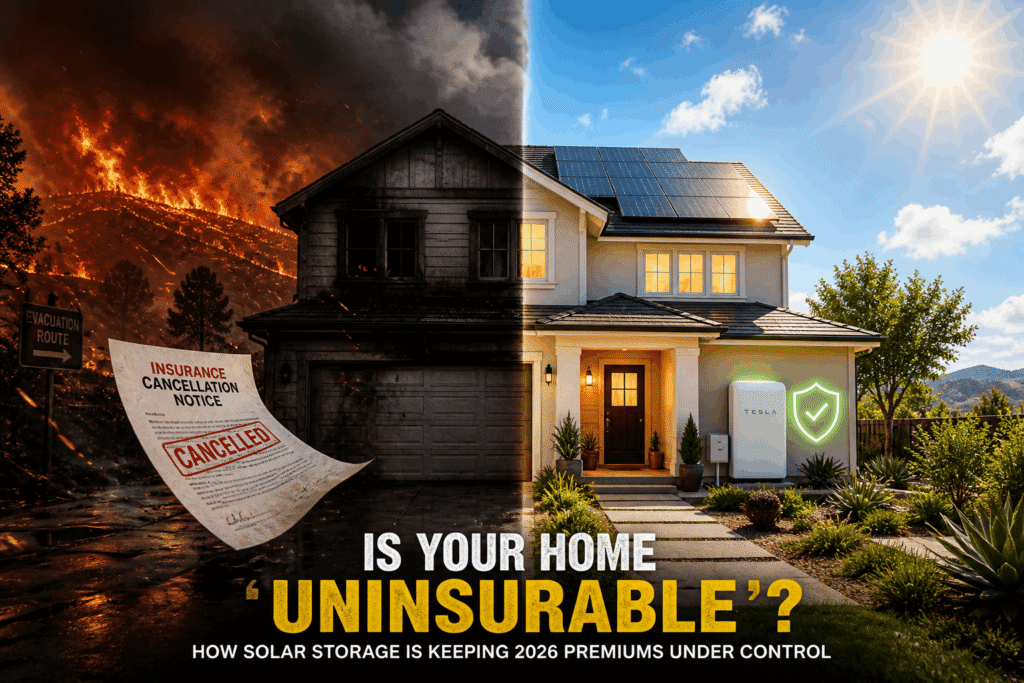
If you’ve opened a homeowners insurance renewal letter in the last twelve months and felt your stomach drop, you’re not alone. Across California, Florida, Texas, Georgia, and a growing list of other states, insurers are doing something they almost never used to do: walking away entirely. Not raising your rates — pulling coverage. Leaving homeowners scrambling for the state insurer of last resort at double the premium and half the protection. This isn’t a temporary blip. According to research from the Natural Resources Defense Council, the United States risks becoming “an uninsurable country” if current climate and development trends continue. But here’s what the doom-and-gloom headlines tend to skip: a growing number of homeowners are actively outrunning this crisis — not by moving, and not by just absorbing the higher bills. They’re doing it with solar and battery storage. And the financial case, even after federal tax credits changed dramatically in 2026, is stronger than most people realize. The Insurance Crisis Is Real — And It’s Getting Personal Let’s start with some numbers that are hard to ignore. The average cost of homeowners insurance in the United States has climbed roughly 30 to 40 percent over the last five years — and that’s the national average. In states like Florida, where the market has been shaken to its core by successive hurricanes, average premiums have risen by over $1,400 per household since 2020 alone. California homeowners who can still find private coverage are often paying two or three times what they paid just a few years ago. The numbers behind those figures tell an even harder story. Insured losses from natural disasters in the U.S. averaged $100 billion per year between 2023 and 2025, up from roughly $15 billion annually a decade earlier. That’s not a rounding error — it’s a structural shift in how risky American real estate has become. And insurers are responding accordingly. In California alone, roughly 1 in 5 homes in the highest-risk fire zones lost coverage between 2019 and 2024. California’s FAIR plan — the state’s backstop insurer — grew from covering around 210,000 homes in 2020 to more than 463,000 by 2024, with total exposure exceeding $450 billion. After the devastating 2025 LA wildfires, FAIR plan claims approached nearly $5 billion in a single event. Georgia is seeing projected 10 percent increases in 2026 following 9 percent in 2025. North Carolina, still reeling from Hurricane Helene, faces another round of hikes. The pattern repeats in state after state: weather gets worse, losses pile up, insurers raise rates or leave, homeowners get squeezed. Why Solar + Battery Storage Changes Your Risk Profile — Not Just Your Electric Bill Here’s where most solar conversations get stuck: people think about panels in terms of monthly savings on electricity. That’s real and worthwhile. But in 2026, the more significant conversation is about risk — specifically, the kind of risk that insurers price into your premium. When you pair solar panels with a battery storage system, you’re doing something that plain panels can’t: you’re making your home energy-independent during the events that cause the most damage. A home with battery backup doesn’t need to rely on utility power during a wildfire evacuation window, a hurricane approach, or an ice storm. It can power sump pumps, maintain refrigeration for medications, keep communications up, and reduce fire risk from downed power lines. That’s not just a comfort factor. Some insurers — particularly those operating in wildfire-adjacent markets — are beginning to incorporate “home hardening” measures into their underwriting assessments. A solar-plus-storage system that reduces dependence on the grid during high-risk periods is increasingly seen as a risk mitigation feature, similar to ember-resistant vents, metal roofing, or defensible landscaping. The 2026 battery market has also matured considerably on safety. Insurers who evaluate residential storage now look closely at battery chemistry (Lithium Iron Phosphate, or LFP, carries significantly lower thermal risk than older chemistries), Battery Management System certifications, installation standards, and thermal runaway protocols. A well-specified, properly installed LFP system today is a very different risk proposition than early-generation storage from five or six years ago. The Tax Credit Landscape in 2026: What Actually Changed and What Remains It would be wrong to write about solar and battery storage in 2026 without addressing the elephant in the room: the federal tax credit situation has shifted significantly, and homeowners deserve a straight answer rather than vague optimism. The short version: the 30% Residential Clean Energy Credit (Section 25D) was terminated by legislation signed in July 2025, effective December 31, 2025. If you bought and installed a qualifying solar or battery system before that date, you can still claim the credit on your 2025 federal tax return — and it carries forward to future tax years if your liability doesn’t cover it all in one year. For systems installed in 2026 and beyond under direct ownership, that federal benefit no longer applies. On a typical combined solar-plus-storage system worth $35,000–$45,000, that’s a meaningful difference in out-of-pocket cost. However, the picture isn’t as bleak as some coverage suggests: Leased and PPA systems still qualify for commercial investment tax credits (Section 48E) through 2032, and installers pass those savings to homeowners through lower monthly payments. A lease-to-own or prepaid lease structure, which lets you eventually take title to the system, is becoming increasingly common. State-level incentives remain active and in some cases more valuable than ever. California, Connecticut, New York, and Colorado all offer battery rebates ranging from $5,000 to $16,000 depending on program specifics. Homeowners who use part of their property for legitimate business purposes — a home office, a rental unit, business-registered vehicle charging — may still qualify for business-use incentives in 2026, with some structures allowing reservations through July 4, 2026 for projects built as late as 2030. The critical point is that navigating this properly requires looking at your specific tax situation, not just a generic checklist. This is exactly the kind of complexity where working with someone who understands solar tax
Titan Solar Bankruptcy Exposes Homeowners to Legal Risk — Here’s Your Essential Guide
Titan Solar Bankruptcy Exposes Homeowners to Legal Risk — Here’s Your Essential Guide The sudden collapse of Titan Solar Power in June 2024 sent shockwaves through the solar industry and left thousands of homeowners feeling stranded. With installations unfinished, solar systems malfunctioning, and finance payments still active, many customers are asking: What now? If you financed a solar system through Titan Solar or were left with broken promises, you may still have legal options. At Lawyer Orphan Annie Solar, we specialize in helping homeowners navigate legal challenges stemming from failed solar companies. This article breaks down everything you need to know about Titan Solar’s bankruptcy, your legal rights, and the steps you can take today to protect yourself. What Really Happened to Titan Solar? On June 13, 2024, Titan Solar Power abruptly shut down operations. Just a week later, on June 20, the company officially filed for Chapter 7 bankruptcy, effectively ending its ability to deliver on any warranties, installations, or services it had previously promised. This move left many homeowners in a legal and financial bind. People who trusted Titan for their solar energy needs suddenly found themselves stuck with unfinished work, faulty panels, or loan obligations on systems that don’t even work. Why You Can’t Sue Titan Directly Due to the Chapter 7 bankruptcy filing, all legal actions against Titan Solar Power have been automatically paused or dismissed. Bankruptcy law protects companies from litigation during the process, which means homeowners cannot sue Titan directly for unfinished work, misrepresentation, or damages. This has understandably caused frustration, but don’t lose hope—there is another legal route you can take. But You’re Not Out of Options: Sue the Lender Instead Thanks to powerful consumer protection laws, specifically the FTC Holder Rule, you may be able to bring claims directly against the lender who financed your solar system. Here’s how it works: If Titan Solar committed fraud, misrepresented services, or breached your contract, you can assert those same defenses against the lender. This could include: Even though Titan is bankrupt, the lender who financed your solar system can still be held accountable. Understanding the FTC Holder Rule The FTC Holder Rule is a federal protection designed to shield consumers from deceptive or fraudulent business practices when third-party financing is involved. Essentially, it means that any loan agreement you signed related to Titan’s services cannot legally isolate the lender from Titan’s wrongdoing. So if Titan Solar tricked or misled you, those claims are valid not only against Titan (who can’t be sued) but also against the loan company, which can still be held legally responsible. Many homeowners have already used this rule to cancel their solar loans and stop payment without damaging their credit, especially when the system never worked or was installed improperly. Immediate Steps for Impacted Homeowners If you were affected by Titan Solar’s shutdown, here are the key actions to take immediately: Why Acting Now Is Critical Taking swift legal action is crucial for several reasons: Professional Legal Support Matters At Lawyer Orphan Annie Solar, we understand the complexity and frustration homeowners face when dealing with failed solar companies like Titan Solar. With a proven track record of handling many solar litigation cases, our firm has successfully helped clients cancel fraudulent solar loans, eliminate UCC liens from property titles, and recover from misleading solar panel financing agreements. Backed by deep knowledge of consumer protection laws—including the FTC Holder Rule—our team fights to protect your rights and your financial future. Whether you’re stuck with a non-functioning system or a loan you never fully agreed to, we’re here to guide you every step of the way. Protect Your Home and Finances The fall of Titan Solar Power may have left you feeling helpless—but you’re not alone. Legal options still exist, and laws are in place to protect you from financial abuse caused by failed solar companies and careless lenders. Let Lawyer Orphan Annie Solar help you review your case, defend your rights, and reclaim control of your home and finances. Contact us today for consultation, and take the first step toward justice and resolution.